
Google and Magic Leap Debut Android XR Smart Glasses Prototype with AI Integration
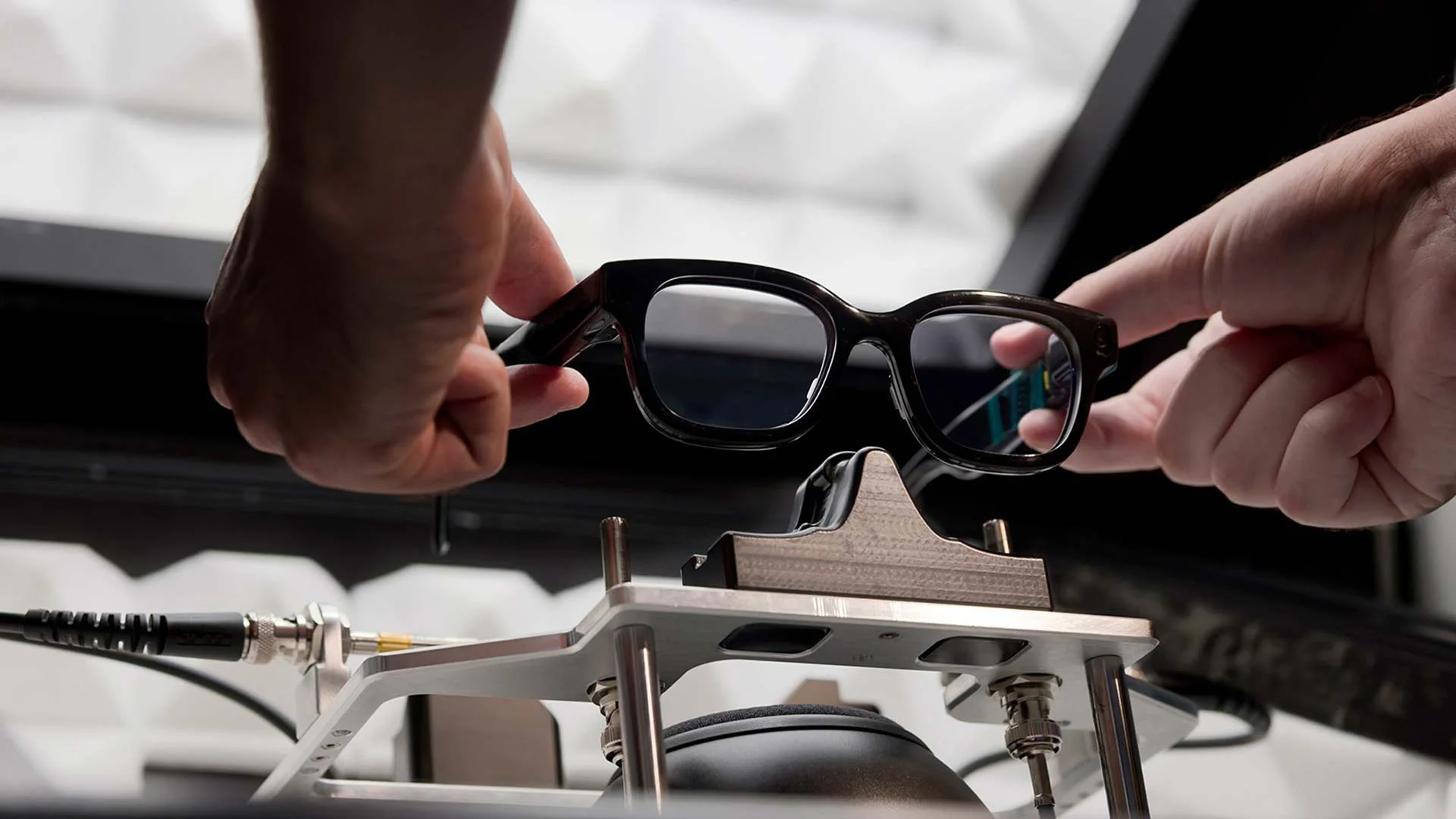
Image Source: Magic Leap
Magic Leap and Google have unveiled a prototype for lightweight smart glasses powered by Android XR, featuring deep integration with multimodal artificial intelligence to overlay digital information onto the real world while maintaining user awareness of their surroundings. The device, showcased on Tuesday at the Future Investment Initiative (FII) in Riyadh, serves as a reference design for developers building within Google's emerging extended reality platform.
The prototype highlights how AI can enhance everyday tasks through contextual understanding, drawing on cameras and microphones to process visual and auditory inputs in real time. Demonstrations at the event illustrated applications such as live language translation with on lens subtitles and hands free guidance for navigation or messaging, all without pulling users away from their physical environment. This approach positions the glasses as a tool for both enterprise workflows, like remote collaboration in mixed reality settings, and consumer uses, such as quick information retrieval during travel.


















Prototype Design and AI Capabilities
At its core, the glasses employ Magic Leap's ultra lightweight waveguides paired with Google's Raxium microLED light engine to project stable, high clarity digital overlays directly into the user's field of view. These elements ensure text remains legible and colours accurate even in varied lighting, expanding the immersive potential beyond bulkier headsets. The frame resembles everyday eyewear with thicker rims to accommodate electronics and a forward facing camera, prioritising comfort for all day wear.
Central to the device is Google's Gemini AI assistant, adapted for the Android XR operating system. Gemini processes multimodal data, combining sight, sound and user intent, to deliver proactive assistance, such as identifying nearby points of interest or capturing photos seamlessly. Unlike screen bound interactions, this setup keeps eyes relaxed by blending virtual elements naturally with the physical scene, reducing the cognitive load associated with traditional augmented reality. While specific hardware metrics like battery duration or exact field of view angles were not disclosed, the design emphasises manufacturability, aiming to scale production for broader accessibility.









Extending the Collaboration
The reveal coincides with a three year extension of the companies' partnership, first formalised in May 2024 and building on earlier technical exchanges. Google has integrated around 100 Magic Leap staff into its XR projects since late last year, tapping their specialised knowledge to refine prototype hardware. For Magic Leap, this move aligns with a strategic shift from producing standalone devices to licensing its optics and prototyping services to ecosystem partners.
Shahram Izadi, vice president and general manager of Google XR, described the result as a breakthrough in usability. "What makes this prototype stand out is how natural it feels to look through", Izadi said. "Magic Leap's precision in optics and waveguide design gives the display a level of clarity and stability that's rare in AR today". Magic Leap chief executive Ross Rosenberg echoed the sentiment, noting the firm's evolution into an enabler for the wider industry after years of in house development.
This alliance stems from a shared recognition that isolated efforts in AR have historically faltered due to hardware constraints and market readiness. By pooling resources, the pair seeks to create reference models that other manufacturers, including eyewear brands like Warby Parker, can adapt for Android XR devices.














Navigating Past Hurdles
Magic Leap's journey to this point reflects the AR sector's volatile trajectory. Founded in 2010, the Florida based firm raised over US$3.5 billion in venture funding on promises of transformative "mixed reality" before launching its first consumer headset, the Magic Leap One, in 2018 at US$2,295 a unit. Initial sales disappointed, with estimates of just 6,000 devices moved in the first half year, prompting a refocus on enterprise clients with the more refined Magic Leap 2 in 2022.
Financial pressures led to a 2022 acquisition by Saudi Arabia's Public Investment Fund, which took a majority stake through a US$450 million deal and has since committed more than US$1 billion cumulatively to stabilise operations. Workforce reductions in July 2024, including 75 roles across sales and marketing, underscore a leaner model centred on intellectual property rather than mass production. Google, meanwhile, carries echoes of its 2014 Google Glass experiment, which faced backlash over privacy and faltered commercially before being shelved in 2015. Both entities now view AI as the catalyst to overcome those early pitfalls, with Android XR launching alongside Samsung's Galaxy XR headset just weeks prior.















Broader Market Implications
From an industry standpoint, the prototype signals a maturing AR landscape where AI serves as the linchpin for adoption. Analysts note it could challenge Meta's updated Ray-Ban Display glasses, which integrate similar AI alongside in lens micro projectors and waveguide style optics for visual overlays, by offering potentially sharper, more persistent virtual elements in a comparable form factor. For enterprises, this translates to enhanced tools for remote training or site inspections, potentially cutting costs in sectors like manufacturing and logistics through real time, context aware guidance.
Consumers stand to gain from frictionless AI companions that augment rather than distract, fostering habits like multilingual conversations or instant fact checking. Yet challenges persist: privacy concerns around always on cameras remain acute, and the sector's fragmentation, with Apple's Vision Pro and Meta's Orion looming, demands standardised platforms like Android XR to drive developer interest.













Charting AR's Next Chapter
Looking forward, experts foresee 2025 as a pivotal year for AI infused wearables, with prototypes like this paving the way for hybrid devices that blur lines between glasses and headsets. Trends point to smaller, brighter displays via microLED advancements, coupled with edge AI processing to minimise latency and data transmission. Magic Leap's role as a behind the scenes innovator could accelerate this, enabling a diverse array of form factors tailored to global markets.
As Google rolls out Android XR to trusted testers this year, the focus will sharpen on usability refinements and ethical AI deployment. If scaled effectively, such integrations may finally realise AR's long elusive promise: enriching human perception without overwhelming it.






















 TheDayAfterAI News
We are a leading AI-focused digital news platform, combining AI-generated reporting with human editorial oversight. By aggregating and synthesizing the latest developments in AI — spanning innovation, technology, ethics, policy and business — we deliver timely, accurate and thought-provoking content.